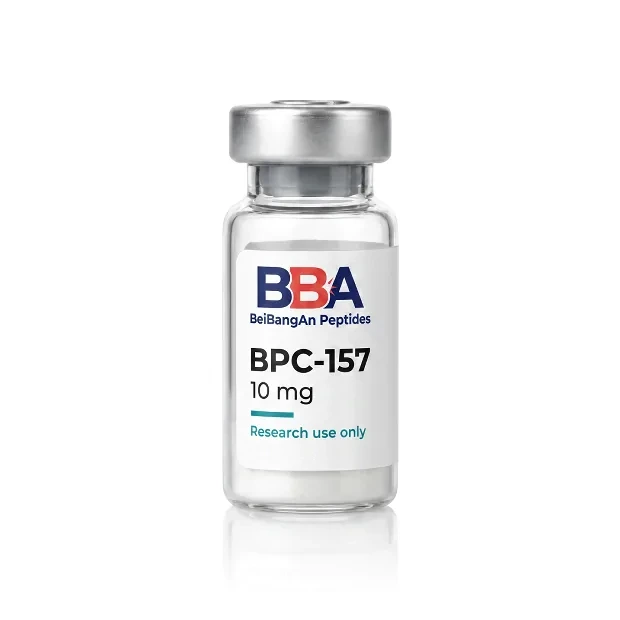
BPC-157
Tissue-repair peptide
BPC-157 is a short lab-made peptide — a small chain of 15 amino acids, the building blocks of proteins. Its recipe comes from a small piece of a protective protein first found in stomach fluid. It is made in the lab and does not occur naturally in this exact form.
Also known as Body Protection Compound-157 · PL 14736 · Pentadecapeptide BPC 157
How it is studied
In lab and animal studies, researchers describe it as taking part in how the body grows tiny new blood vessels and helps cells travel to where they are needed. These are natural steps the body uses to build and supply new tissue.
Research context
A commonly used reference compound in early tissue-repair and gut research, where scientists watch how cells move and how new blood vessels form in animal and cell-sample studies.
Good to know
Findings in people are limited; most come from animal and cell research. Research use only.
Research area
Tissue-repair research. This group covers peptides that scientists study in the lab to learn how cells and connective tissue behave in controlled models. In cell samples and animal studies, researchers use them to explore cell movement, new-vessel formation, and inflammation-signaling. All are research compounds for laboratory use only, with no established use in people.
Strengths and availability
Single vials in stock: 10mg. Other listed strengths: 5mg, in stock. 10-vial kit prices are for wholesale members; the shop sells single vials and research bundles.
Certificates of analysis
We publish 1 third-party certificate of analysis for BPC-157 (Janoshik). A certificate covers only the lot it was run on. Each report is also verifiable at the lab itself.
Related reading
BPC-157 in the compound guide · Research reference · How to read a peptide COA · Certificate library
More from the same research family
Tissue-repair research:
Research use only
Research materials sold by BBA Peptides are for laboratory and research use only: not for human or veterinary use, and not a drug, food, supplement or cosmetic. The research-use policy sets out what is permitted. A research account is required to see prices and to order. Browse the full catalog.