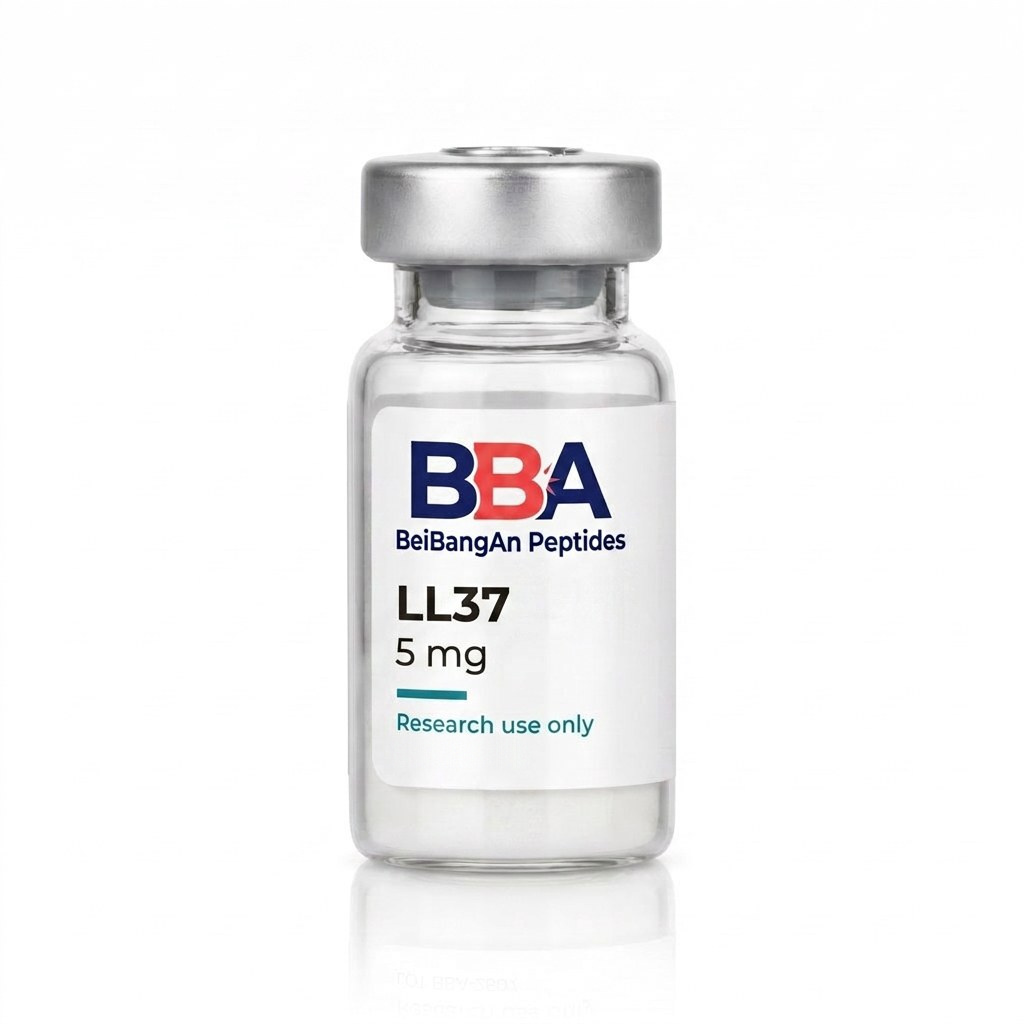
LL-37 (CAP-18)
Natural immune-defense peptide
LL-37 is a peptide the human body makes naturally, 37 amino acids long. It is the active part of a germ-fighting protein called cathelicidin, which the body's immune cells produce. The research version is made in the lab.
Also known as Cathelicidin LL-37 · CAP-18 fragment · hCAP18 (37)
How it is studied
Researchers describe it as a germ-fighting and immune-signaling peptide: it can break apart the outer coats of microbes and can interact with immune cells that guard the body. Scientists study these germ-fighting and signaling actions in the lab.
Research context
A reference compound in early germ-defense, immune-system and wound-biology research, where investigators study how it acts on microbes and immune cells in lab studies.
Good to know
A natural immune peptide studied mainly in cell and animal research. Research use only.
Research area
Tissue-repair research. This group covers peptides that scientists study in the lab to learn how cells and connective tissue behave in controlled models. In cell samples and animal studies, researchers use them to explore cell movement, new-vessel formation, and inflammation-signaling. All are research compounds for laboratory use only, with no established use in people.
Strengths and availability
Listed strengths: 5mg. In stock. 10-vial kit prices are for wholesale members; the shop sells single vials and research bundles.
Certificates of analysis
No third-party certificate is published for LL37 on this page. The certificate library lists every report we hold.
Related reading
LL37 in the compound guide · How to read a peptide COA · Certificate library
More from the same research family
Tissue-repair research:
Research use only
Research materials sold by BBA Peptides are for laboratory and research use only: not for human or veterinary use, and not a drug, food, supplement or cosmetic. The research-use policy sets out what is permitted. A research account is required to see prices and to order. Browse the full catalog.