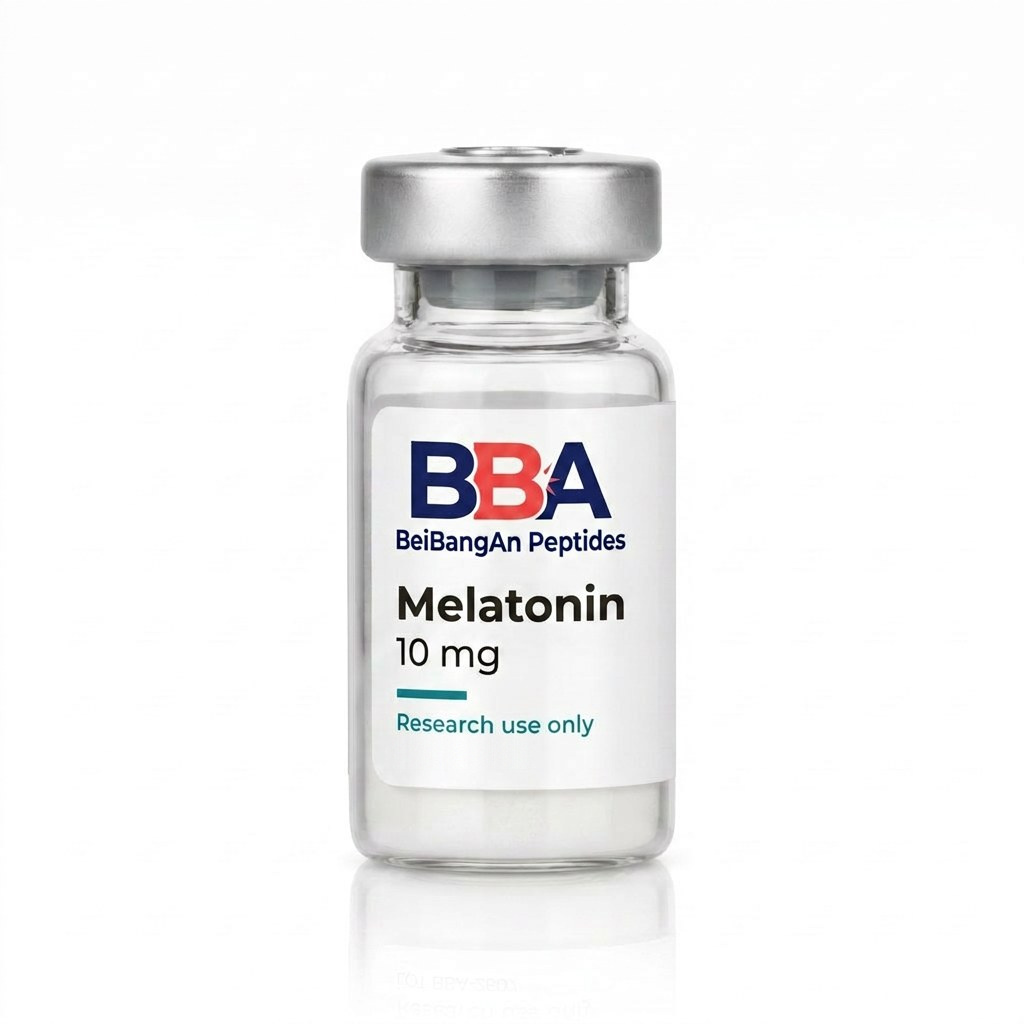
Melatonin
Naturally occurring sleep hormone
Melatonin is a hormone the body makes on its own in the pineal gland, a tiny structure deep in the brain. The body builds it from a building block found in food, and its levels naturally rise at night and fall during the day.
Also known as N-acetyl-5-methoxytryptamine
How it is studied
It works through the body's internal 24-hour clock, docking onto matching sites in the brain and elsewhere that help keep that daily rhythm on time.
Research context
A well-known reference molecule in research on the body's daily rhythms, studied in laboratory and animal models of the sleep-wake cycle.
Good to know
This is a naturally occurring hormone, not a lab-designed research peptide.
Research area
Cognition, mood & sleep research. This group covers molecules that scientists study in the brain, in the body's stress-response system, and in the sleep-wake cycle. Most are short chains of amino acids (the tiny building blocks of proteins), and a couple are signaling substances the body makes on its own. All are described here for laboratory research only.
Strengths and availability
Listed strengths: 10mg. In stock. 10-vial kit prices are for wholesale members; the shop sells single vials and research bundles.
Certificates of analysis
No third-party certificate is published for Melatonin on this page. The certificate library lists every report we hold.
Related reading
Melatonin in the compound guide · How to read a peptide COA · Certificate library
More from the same research family
Cognition, mood & sleep research:
Research use only
Research materials sold by BBA Peptides are for laboratory and research use only: not for human or veterinary use, and not a drug, food, supplement or cosmetic. The research-use policy sets out what is permitted. A research account is required to see prices and to order. Browse the full catalog.